A Weekend of Lessons: DF95 Racing at Huntingdon and IOM at Lincoln
Last weekend I competed in two very different but equally enjoyable events. While the results were respectable (a 2nd and a 3rd), it was one of those weekends where the real value came from the lessons learned rather than the trophies won.
Huntingdon Regional Event
The first event was the DF95 Regional at Huntingdon. The day began cold, but with a steady breeze and the promise of sunshine later. By lunchtime the temperature had risen enough for shorts and T-shirts to appear along the bank, providing a much more pleasant backdrop for racing.
From the outset my starts and first beats were strong. In fact, I was often in excellent positions approaching the windward mark. However, one issue repeatedly caught me out throughout the day: choosing the correct leeward gate mark.
In three separate races I rounded the wrong gate while leading, only to lose several places on the following beat. It was one of those tactical decisions that seems straightforward in hindsight but is much harder when you're at the front of the fleet trying to make the call in real time.
The standout performer of the day was Buzz Coleman, who read the conditions superbly and sailed an excellent event. The competition between us came down to the eighth and final race when we found ourselves level on points.
I led into the leeward gate and knew that Buzz had consistently favoured the right-hand gate throughout the day, usually gaining from the decision. Convinced this was the winning move, I followed him and rounded the right-hand gate. The rest of the fleet, including Buzz, selected the left-hand gate.
Almost immediately the wind shifted around 20 degrees to the right. What had been a comfortable lead rapidly became a mid-fleet position as I found myself unable to tack and cover the boats on the other side of the course. That one decision effectively handed the event to Buzz.
It brought back memories of the DF95 Nationals, where similar tactical choices proved decisive. Nevertheless, Buzz sailed brilliantly all day and fully deserved the win. I was genuinely delighted for him.
The IOM Clive Hand Memorial Event, Lincoln
Sunday saw me travel to Lincoln for the Clive Hand Memorial Event.
My performance felt noticeably stronger and, overall, I was pleased with how I sailed. Full race reports can be found through the MYA website, MYA Downwind on Facebook, and Yachts & Yachting.
Ironically, one theme continued from the day before. On at least two occasions I led races only to choose the wrong gate and lose valuable places. Where have I heard that before?
What Did I Learn?
Every event provides an opportunity to improve, and this weekend generated several useful takeaways.
Starting Technique
At Gosport, starts are always fiercely competitive, but there is one key difference. You can only pull the trigger exactly on the gun or risk being called over the line.
At these larger events, I realised that waiting for the gun leaves you immediately behind the fleet. To be competitive, you need to be accelerating with around one second to go.
It took me a few races to fully appreciate the difference, but once I did, my starts improved significantly. The reward is simple: you're on the front row rather than fighting through dirty air from behind.
Rig Set-Up
For the IOM, I used a more conventional rig set-up with a pre bent mast, increasing jib luff tension and improving acceleration out of manoeuvres.
Boat speed felt good throughout the day. As conditions evolved, I gradually sheeted the main boom slightly closer to the centreline while easing the jib boom marginally. The combination appeared to improve both pointing ability and overall speed.
It's certainly an area I intend to explore further over the winter.
The Leeward Gate Challenge
The biggest lesson of the weekend was undoubtedly leeward gate selection.
When you're leading, choosing the correct gate can make the difference between extending a lead and finding yourself swallowed up by the fleet. The difficulty, of course, is making that decision when everyone else appears to be heading in the opposite direction.
It's easy to analyse afterwards. It's considerably harder when you're racing.
Clearly, this is an area of my tactical sailing that needs more attention over the coming months.
Looking Ahead
Despite a few frustrating moments, it was an excellent weekend of racing against strong competition. The positives were encouraging: good starts, competitive boat speed and a rig set-up that continues to develop.
The challenge now is converting those leading positions into race wins by making better strategic decisions when it matters most.
There are plenty of photographs from the weekend, and they provide a useful opportunity to study both rig settings and boat trim. Sometimes the best coaching tool is simply a good photograph taken at the right moment.
As winter approaches, there will be plenty to work on. That's one of the great attractions of radio sailing: there is always another lesson to learn and another tenth of a knot to find.


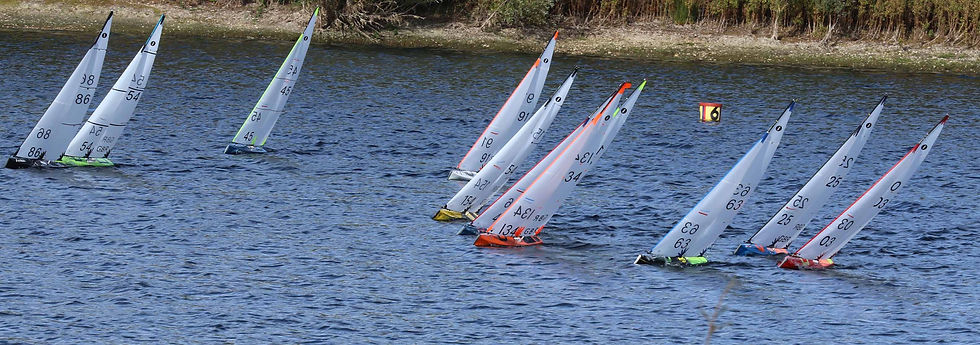


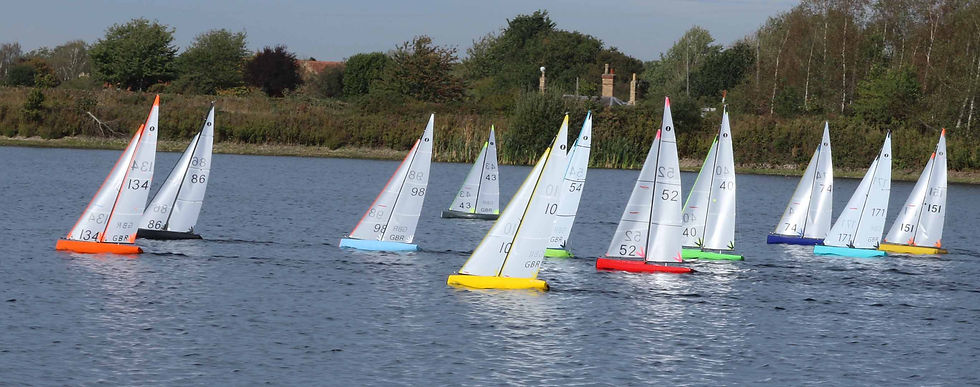

My thank to Kaz of Lincoln for the great photos


Comments